News Article One
Medical Laboratory Assistants (MLAs) prepare, and in some cases process samples within a pathology laboratory. They also utilize pre-analytical systems in order for biomedical scientists (BMS) or Medical Laboratory Scientific Officers to process the biochemical tests requested on the sample. The majority of an MLA's time is spent in processing specimens. As such, the MLA has to have excellent knowledge of their particular sample acceptance policy, whilst obeying the data protection act, patient confidentiality, COSHH and the Caldicott rules. Info provided by Bio-medical.org
News Article Two
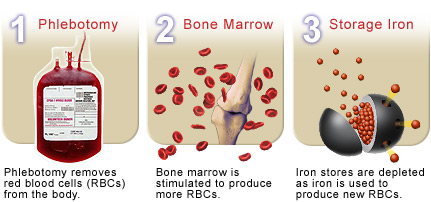
As phlebotomy continues its transition from a laboratory-based function to a nursing-based function, issues continue to emerge that question the value of assigning phlebotomy responsibilities to non-laboratory professionals. Without properly training those new to blood collection, patients may suffer increased discomfort, disabling injuries and the negative impact that compromised specimens can have on their care. Also at risk are the multi-skilled healthcare workers themselves who don’t perform venipunctures frequently enough to feel comfortable with the equipment. They are seen as more vulnerable to sustain an accidental needlestick Dennis Ernst: Lab Explorer
News Article Three
How is toxic shock syndrome transmitted?
* staphylococcus infections - Staphylococcus aureus (or S. aureus) may normally exist in a person's nose or vagina and not cause infection. Because it is part of the body's normal bacteria, 90 percent of individuals develop antibodies to prevent infection. S. aureus can be transmitted by direct contact with infected persons. Individuals who develop TSS, usually have not developed antibodies against S. aureus. Therefore, it is not usually considered a contagious infection. S. aureus infections may also occur from another infection such as pneumonia, sinusitis, osteomyelitis (infection in the bone), or skin wound, such as a burn or surgical site. If any of these areas are infected, the bacteria can penetrate into the bloodstream.
* streptococcus infections - Streptococcus pyogenes (or S. pyogenes) TSS may occur as a secondary infection. Most commonly, this is seen in individuals who have recently had chickenpox or bacterial cellulitis (infection of the skin and underlying tissue) Provided By Bio-Medical.org
News Article Four
Title: Safety butterfly needle
Abstract: A butterfly needle for venipuncture includes a body with two protruding flexible tongues that can be bent by manual gripping by the user from a diverging position to a converging position, and a needle mounted axially in the fore end of a needle-carrier which a tail protruding rearward from the body to couple with the connection of a flexible tube destined to be connected to a syringe or a bottle. The needle-carrier is mounted axially slidable in the body to pass from a forward position of use wherein the needle protrudes forward from the body to perform the injection to a retracted position of safety wherein the needle is protected inside the body, there being provided guide elements able to guide the axial movement of the needle-carrier inside the body and end-of-stroke and locking elements able to lock the needle-carrier in the advanced position and in the retracted position. Provided by Freshpatent.com.


 APA News...